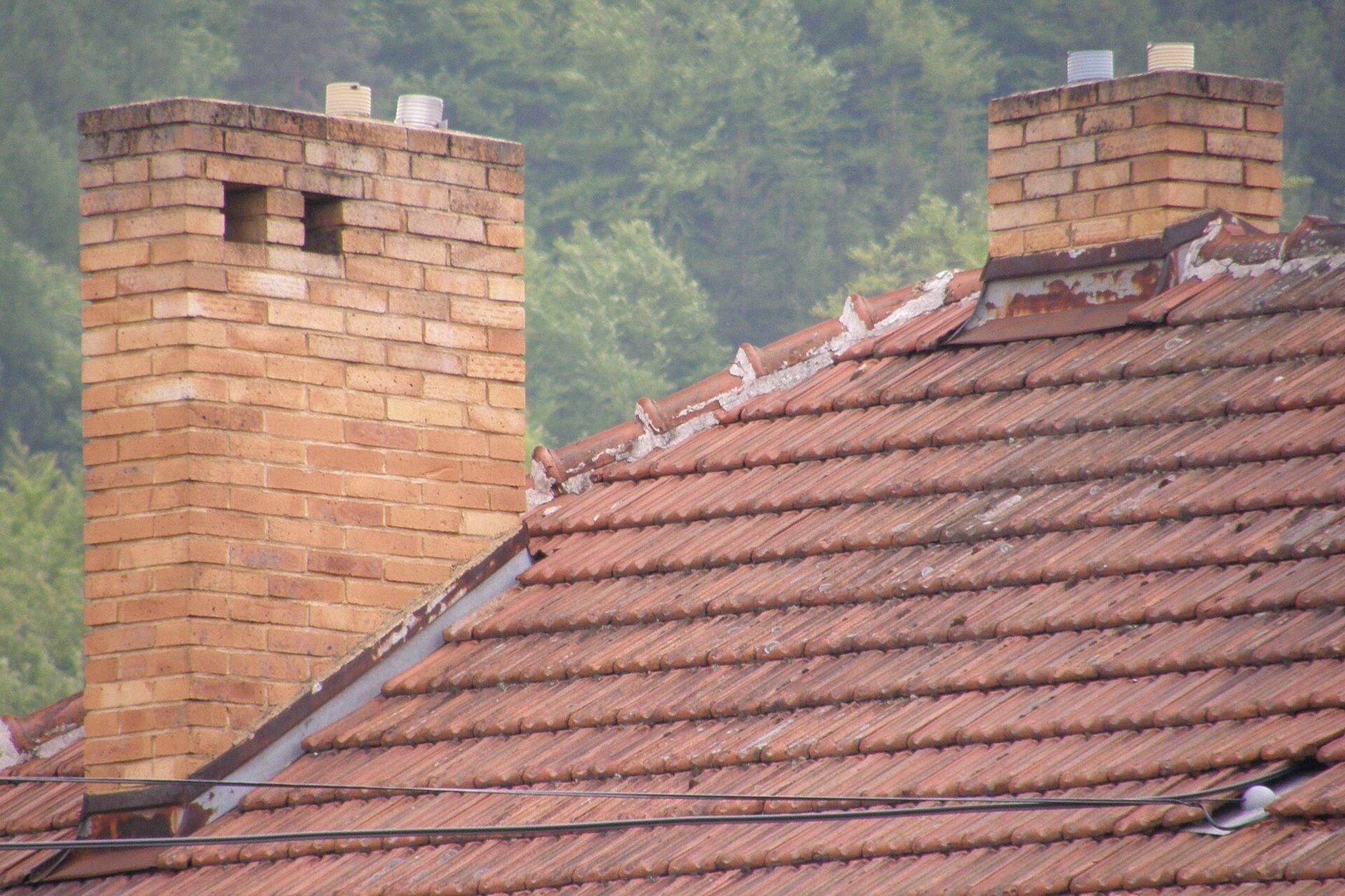

A crack at the top of a brick chimney looks much the same in a phone picture whether it needs a modest repair or a crew taking brick off the roof. Owners in Whittier often bring us a rebuild quote and a single photo of the top. Their question is a fair one: is the damage in the crown, or in the chimney underneath it? This post explains how we tell the two apart and what each answer means for the bill.
Two parts, two jobs
Picture the top of a chimney in two layers. The upper layer is the slab of concrete or mortar poured over the last row of brick. The lower layer is everything below it: the brick, the mortar holding it together, and the clay tile running up the middle. Water that gets past a failed slab soaks down into the brick, so the two problems are related. They are not the same job, though, and they are not the same price.
Signs the trouble stays in the slab
- Cracks that run across the slab and stop at its edges.
- A slab that has lifted or slid a little while the brick under it stays firm.
- Corners broken off, with sound brick showing beneath.
- A slab that dishes inward, so rainwater sits on it after a storm.
- Cracks fanning out from the flue tile, where the slab was poured tight against it.
Under all of these, the brick tells the rest of the story. If each row holds still when pushed and the mortar resists a scratch, the repair stays at the top.
Signs the stack itself is failing
- Cracks that leave the slab and step down through the mortar joints like a staircase.
- Bricks in the upper rows that shift under a hand.
- Mortar that turns to sand when scraped.
- A stack that has tilted toward the yard or the street, or whose top rows sit out of line with the rest.
- Brick faces that have flaked away, leaving soft cores exposed.
Any of these means water or movement has already reached the masonry, and a new slab poured on top would sit on a weak base.
What each repair involves
Crown work comes in two sizes. Fine cracks in a sound slab get filled and coated with a sealer that can stretch as the chimney heats and cools. A slab broken right through is removed, and a new one is formed on the same brick, shaped to throw water outward and kept free of the tile so the two can move separately. See chimney crown repair for the details of that job.
A rebuild starts lower. The loose brick comes off one row at a time until the rows below stop moving, then the brick is relaid in fresh mortar and a new slab goes on top. How far down that goes is the whole question, and it is why a rebuild quote should show you the brick that moves. Our chimney rebuilds page describes the range.
Owners rebuilding the top of a chimney often raise quake work at the same time. Options run from steel that ties the chimney back to the house framing to rebuilding the upper part lighter. Which suits a given chimney depends on its height, its brick and how it meets the roof, and we lay the choices side by side. The seismic retrofit page covers them in general terms.
What decides the price
Neither crown work nor rebuilds sit on our price list as a fixed figure. A slab over one narrow flue and a slab spanning three are different days of work, and a rebuild depends on how many rows come off. Here is how the visits and parts around the job are priced:
| Item | Price |
|---|---|
| Visual look at the top and the hearth | $53 |
| Camera visit through the whole chimney | $380 |
| Screened cap, often fitted with a new slab | quoted after we measure |
When the question is crown or rebuild, the camera visit is usually the right one, because cracked tile under a cracked slab changes the answer. Ask in the form for a crown or rebuild check, and mention how steep the roof is so we bring the right ladder.
Why a second look pays on this question
The gap between the two answers is large. Rebuilding the top of a stack keeps a crew on the roof for days; a crown repair is often finished in one visit. If your quote says rebuild, it should show you brick that moves or mortar that fails. If its photos show a cracked slab on firm brick, it is fair to ask why the brick has to come off.
The reverse also happens. A quote for a new slab can miss brick that is already loose, and the new crown fails within a few winters because the base under it gave way. Our report names which case you have, with the photos that show it.
One more check is worth making on any rebuild quote: how many rows it plans to take down, and what changes if the brick lower down turns out sounder or weaker than expected. A clear quote states both. A vague one leaves the final number open.
Older Whittier chimneys
Whittier sits close to the fault that moved in 1987, and plenty of chimneys here were patched afterwards rather than rebuilt. Those patches often show up as a newer slab on older brick, or a band of fresh mortar a few rows down. Neither is a problem by itself. Both are things we photograph and explain, so you know what the last repair did and what it left alone.
If someone has told you your chimney top needs work, our contact page is where to arrange a visit that settles which kind.
Sounds Like the Quote You Hold?
Ennis Chimney Experts checks each item on it against the chimney and marks it confirmed, overstated or not found, with a photo. We work from Whittier across Pico Rivera, La Mirada, Norwalk and nearby towns.